Fiberpartner
ORBIT® — Recycled Polyester Fiber from Textile Waste.
Every day, tons of pre-consumer textile go to waste, contributing to the negative impact of the global textile industry. To change that, we are introducing Fiberpartner ORBIT®.

ORBIT® in short
Fiberpartner ORBIT® is our fiber solution, made from pre-consumer textile waste turned into polyester fiber.
One production’s waste, another’s raw material. Pre-consumer textile cut-offs are processed into recycled polyester fiber through mixing, melting, and extrusion.
This approach helps reduce textile production waste while providing fiber options for cost-effective fillings and durable polyester applications.
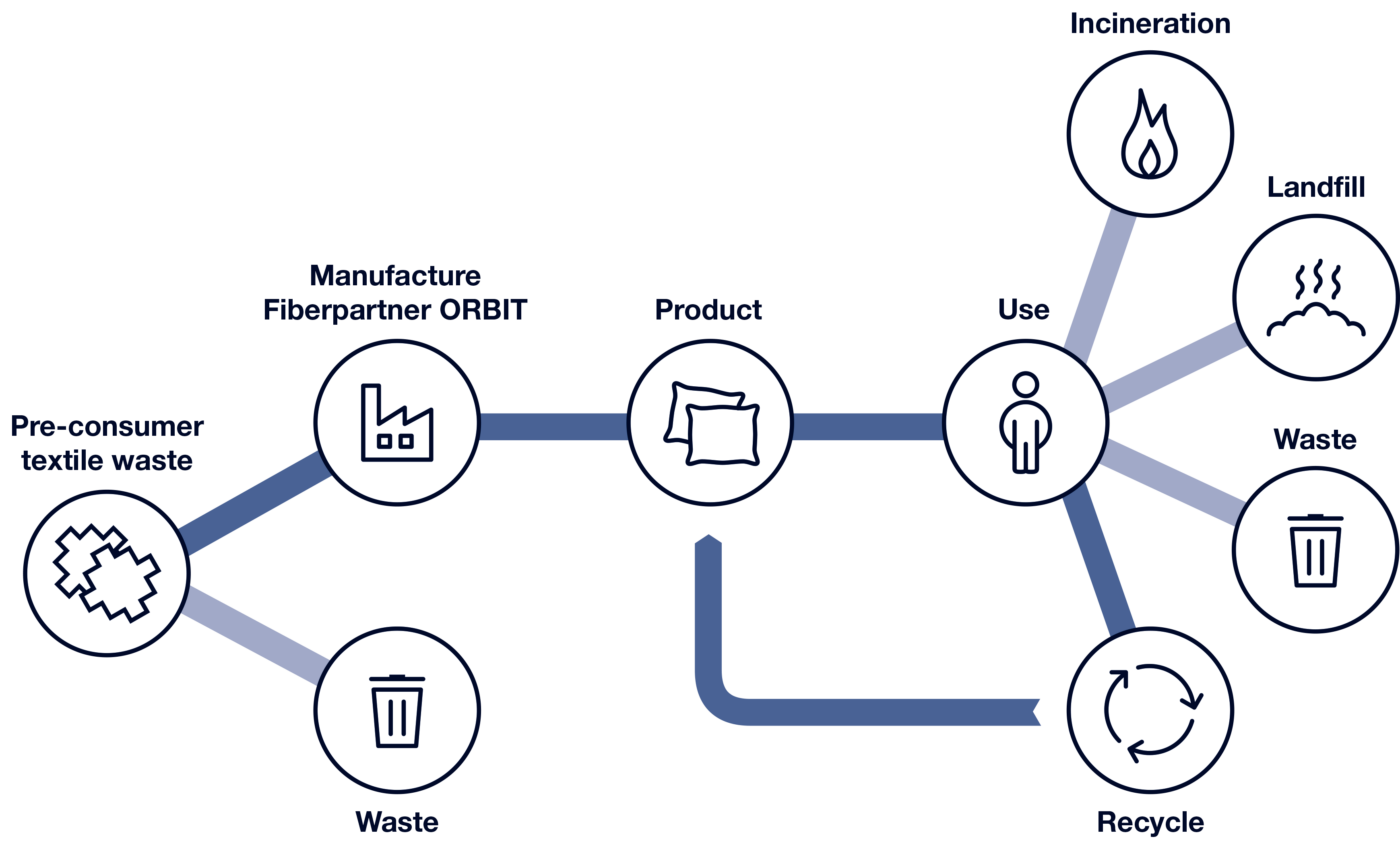
ORBIT® life cycle
Fiberpartner ORBIT®
– a step toward smarter resource use
From waste to value, Fiberpartner ORBIT®, uses pre-consumer textitle waste to create high quality polyester fibers, supporting progress toward more resource-efficient production. By recovering materials and reducing wast, we unlock new opportunities for smarter material use. Join us in advancing fiber solutions where performance and responsibility align.
Fiberpartner ORBIT® is currently available in two versions
Fiberpartner ORBIT®
Smart resource use
Our premium recycled polyester fiber made from textile wast maintains its white color and offers high quality in strength and stretchability. This makes it a strong alternative to traditional recycled polyester from plastic bottles and a smart choice for bedding, clothing, and automotive products.
Fiberpartner ORBIT® Basic.
The cost-effective alternative.
Made from coloured textile waste mixed during processing, ORBIT® Basic results in brown or black fiber at a competitive price point. This makes it ideal for fillings, furniture, cushions, automotive, interiors, and more.

How does Fiberpartner ORBIT® support long-term business relevance?
It repurposes pre-consumer textile waste, helping reduce landfill input and reliance on virgin polyester. This approach supports more resource-efficient production and aligns with evolving market and regulatory expectations.
How does this support circularity?
Fiberpartner ORBIT repurposes textile waste into new fibers, helping reduce the need for virgin raw materials. By using pre-consumer textiles, it contributes to lowering landfill input and supports more resourceefficient production.
What are the benefits of Fiberpartner ORBIT®?
Fiberpartner ORBIT® helps reduce the amount of textile waste sent to landfills and lowers reliance on virgin and bottle-grade polyester by incorporating pre-consumer materials into production. This approach supports more effcient resources use across the value chain.
How does the recycling process work?
For Fiberpartner ORBIT® textile waste is collected, sorted, melted, and extruded into recycled polyester fibers. ORBIT® will be produced through a depolymerization process that transforms textile waste into polyester with properties similar to virgin polyester.
Can Fiberpartner ORBIT® fibers be used for food-related products?
Currently, Fiberpartner ORBIT® Basic is designed for non-food applications such as textiles and furniture. Fiberpartner ORBIT® can be produced with FDA approval for food-related use.
How cost-competitive is Fiberpartner ORBIT®?
Fiberpartner ORBIT® Basic is slightly more affordable than traditional recycled polyester, making it an economical option for manufacturers.
Is Fiberpartner ORBIT® certified?
Yes, it meets recognized industry standards and certifications such as REACH, GRS, OEKO-TEX Class 1.
What are the main applications of Fiberpartner ORBIT®?
Fiberpartner ORBIT® Basic is suitable for cost-effective fillings, furniture, cushions, and automobile interiors. Fiberpartner ORBIT® is ideal for bedding, clothing, and high-performance textiles.
How is Fiberpartner ORBIT® different from traditional recycled polyester?
Unlike recycled polyester made from PET bottles, Fiberpartner ORBIT® uses pre-consumer textile waste as its primary raw material.
What is pre-consumer textile waste?
Pre-consumer textile waste includes fabric scraps, cut-offs, and other remnants generated during textile production that would otherwise go to waste.