Fiberpartner
WE KNOW HOW / QUALITY & TESTING
Recycled polyester pillow filling: how to evaluate loft and resilience
Evaluate recycled polyester pillow filling in the finished pillow, using a defined compression and recovery method. Compare initial height, response under load and recovery after release. Keep these measurements separate from comfort assessments, and repeat relevant checks after the intended washing and drying procedure.
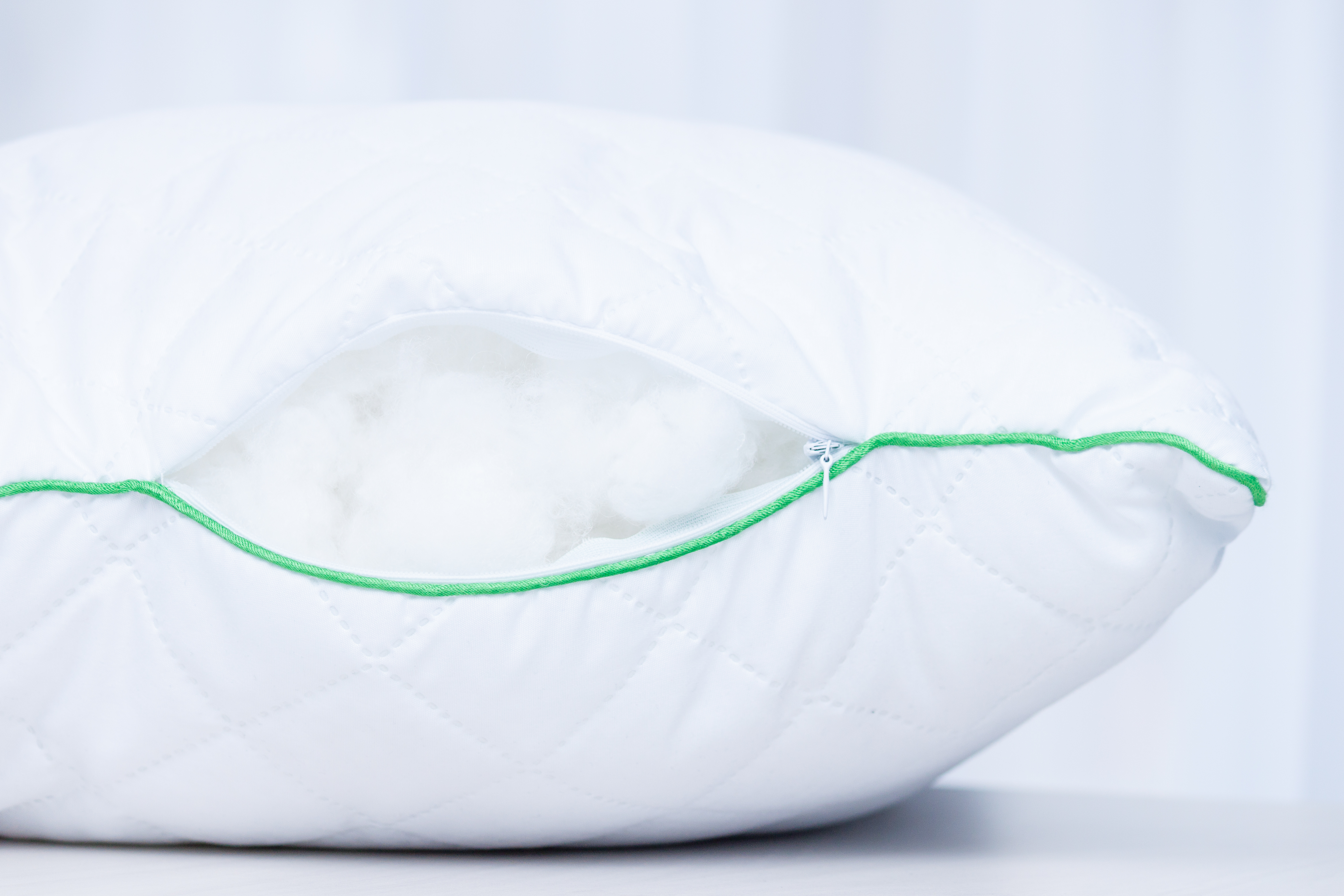
Give loft and resilience a measurable meaning
A pillow can look full without feeling right for your product. Before testing, agree what you need to learn.
For your comparison, define loft through pillow height measured at agreed locations and under stated conditions. Define resilience through recovery after compression. Record the measurement method, not just descriptions such as “fluffy” or “springy”.
Keep a reference pillow and set acceptance criteria before reviewing the candidates. Include more than one specimen of each construction so the decision does not rest on a single sample.
Make the comparison repeatable
Use the same cover, dimensions and filling weight for the first comparison. Record the filling identification and preparation of each specimen, including any fluffing and resting time.
Ask your testing partner to define a suitable protocol covering:
- Where the pillow is measured and compressed.
- The contact area, applied load and loading duration.
- When height is recorded after the load is removed.
- Any repeated loading and the number of specimens.
- How temperature, humidity and sample preparation are controlled.
These are parameters to agree, not a universal pillow test recipe. If you later adjust filling weight or construction, record it as a separate comparison.
Keep measurements and comfort assessments separate
Use one record per specimen:
| Record field | What to capture |
|---|---|
| Sample | Identification and preparation |
| Initial height | Before loading |
| Loaded height | Under the defined load |
| Recovery | Time after release and height |
| After care | Distribution, clumping and repeated measurements |
Keep measurement locations consistent. Assess feel using consistent questions and, where practical, concealed sample identities.
Ask whether the pillow feels supportive, easy to reshape or uneven. Do not turn those impressions into measured recovery results. A published pillow-compression study distinguished between pillows and test locations, but stated that further work was needed to correlate the measurements with comfort.
Check what changes after care
For a washable pillow, evaluate the complete product after the proposed care procedure. Record washing, drying, reshaping and resting conditions. Inspect filling distribution and clumping, then repeat the agreed height, recovery and feel checks.
ISO 6330 provides domestic washing and drying procedures for textile testing. Your testing partner should select the appropriate procedure; the standard is not, by itself, a pillow-performance approval.
Questions and answers
Does more initial loft mean better resilience?
Do not use initial height as a substitute for recovery testing. Measure the pillow again after the defined compression and recovery period, and compare it with its own starting condition.
Does a short compression test prove long-term durability?
No. It describes behavior under the test conditions. Agree any additional repeated-use and care testing needed for your product, and do not translate a short test into an unsupported service-life claim.
Let’s discuss your pillow brief
Share your target feel, pillow construction and evaluation requirements. We can discuss which filling options to include in your comparison.